Blog / Hyundai Comparisons

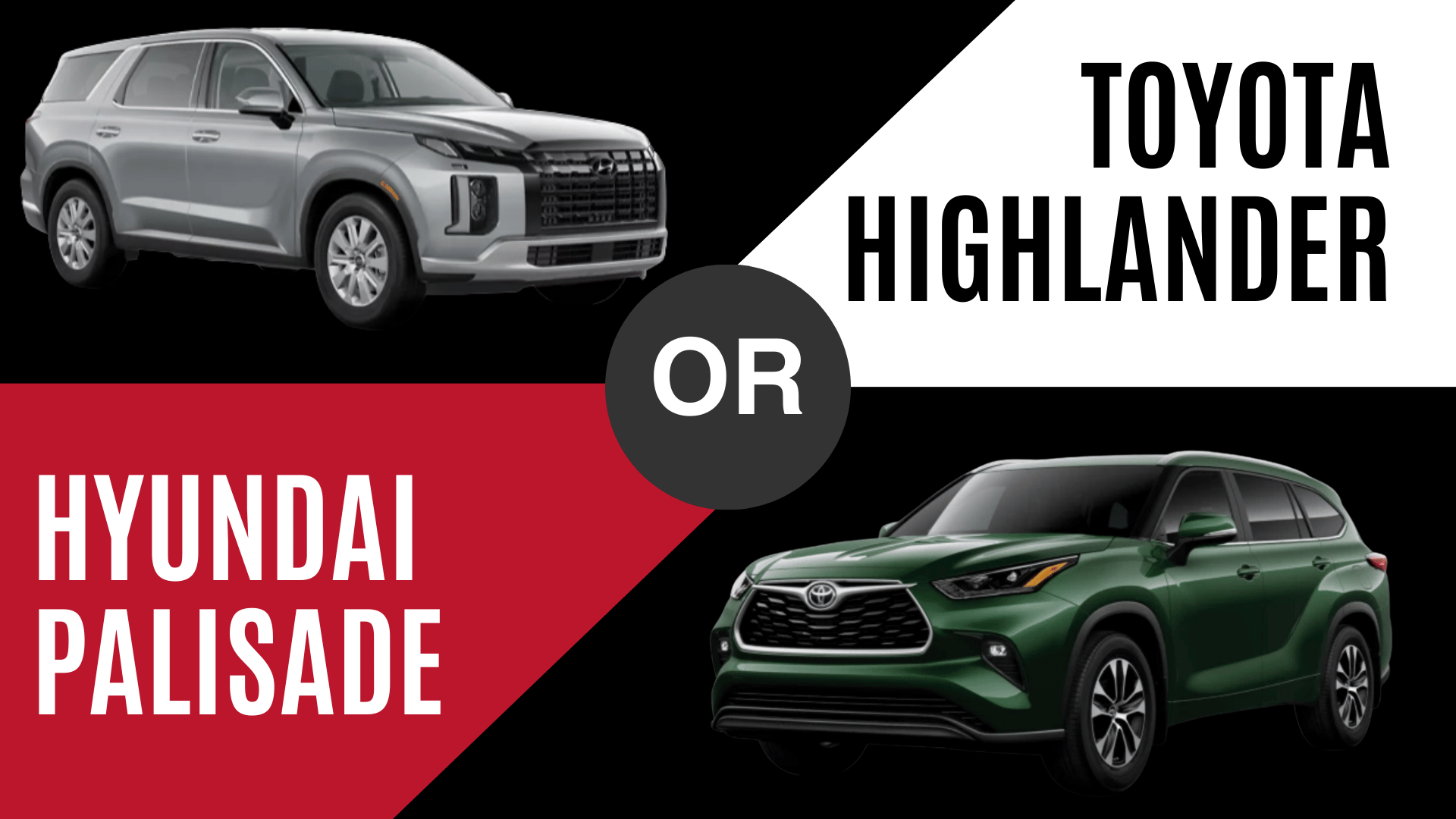
2025 Hyundai Palisade vs. 2025 Toyota Highlander: Which SUV Is Right for You?

2025 Hyundai Palisade vs 2025 Toyota Highlander at Chris Crain Hyundai in Conway AR

If you’re shopping for a reliable and roomy SUV, the 2025 Hyundai Palisade and 2025 Toyota Highlander are both great choices. They each offer three rows of seats, family-friendly features, and strong performance. But when you look closely, the Hyundai Palisade stands out in ways that really matter.

At Chris Crain Hyundai, we’ve compared both SUVs to help you decide which one is best for your lifestyle.

Performance

Hyundai Palisade
The 2025 Palisade comes with a 3.8-liter V6 engine that produces 291 horsepower and 262 lb-ft of torque. It’s paired with an 8-speed automatic transmission that makes driving smooth and powerful. Whether you’re on the highway or towing up to 5,000 lbs, the Palisade handles it with ease.

Toyota Highlander
The Highlander now has a 2.4-liter turbocharged 4-cylinder engine with 265 horsepower and 310 lb-ft of torque. It has good torque, but some drivers may miss the old V6. It can also tow up to 5,000 lbs, but the engine doesn’t feel quite as strong or smooth as the Palisade’s.

Winner: Hyundai Palisade – More horsepower and smoother driving experience.

Off-Road Capability

Hyundai Palisade
With HTRAC All-Wheel Drive and selectable drive modes like Snow, Mud, and Sand, the Palisade is ready for all types of terrain. It’s perfect for weekend getaways or unpredictable weather.

Toyota Highlander
The Highlander has an all-wheel drive option too, but it doesn’t offer as many specific terrain modes. It performs well in bad weather but isn’t as versatile when roads get tough.

Winner: Hyundai Palisade – More options for different road conditions.

Technology Features

Hyundai Palisade
The Palisade includes a large 12.3-inch touchscreen, wireless Apple CarPlay and Android Auto, USB-C charging ports in every row, and Hyundai Digital Key 2 that lets you unlock and start your car with your phone. These features come standard or are widely available in most trims.

Toyota Highlander
The Highlander also offers a 12.3-inch touchscreen, but it’s only available on higher trims. While it has Apple CarPlay and Android Auto, it doesn’t offer some of the smart extras the Palisade has, like the digital key or as many USB ports.

Winner: Hyundai Palisade – More tech features and better value at every trim level.

Interior Space & Comfort

Hyundai Palisade
The Palisade’s interior feels upscale, especially with available quilted Nappa leather, heated and ventilated seats (front and rear), and a quiet, comfortable cabin. It also gives more headroom and legroom in the second and third rows, making it ideal for families and taller passengers.

Toyota Highlander
The Highlander is comfortable, but the third row is tighter and best suited for kids. The materials feel solid, but not as refined as the Palisade’s. It also has less passenger and cargo space overall.

Winner: Hyundai Palisade – More space, better materials, and added comfort.

Safety Features

Hyundai Palisade
The Palisade includes Hyundai SmartSense, which comes with:

  • Forward Collision-Avoidance Assist
  • Lane Keeping Assist
  • Blind-Spot View Monitor
  • Highway Driving Assist
  • Safe Exit Assist

Most of these come standard, giving you great protection without needing to upgrade.

Toyota Highlander
Toyota’s Safety Sense 3.0 package is also solid, with many of the same basic safety systems. However, advanced features like the Blind-Spot View Monitor and Highway Driving Assist are not always available or are only on higher trims.

Winner: Hyundai Palisade – More advanced safety comes standard.

Our Choice: The 2025 Hyundai Palisade

While both SUVs offer good features, the Hyundai Palisade simply gives you more—more power, more space, more technology, and more safety for the money. It’s built for comfort and adventure, making it a great fit for families, commuters, and road-trippers alike.

📍 Visit Chris Crain Hyundai in Conway to test drive the 2025 Palisade and see for yourself why it’s our top pick.

🎉 Explore current offers, ask about financing, and take home the SUV that’s built for your lifestyle.
Posted in:

Related Posts

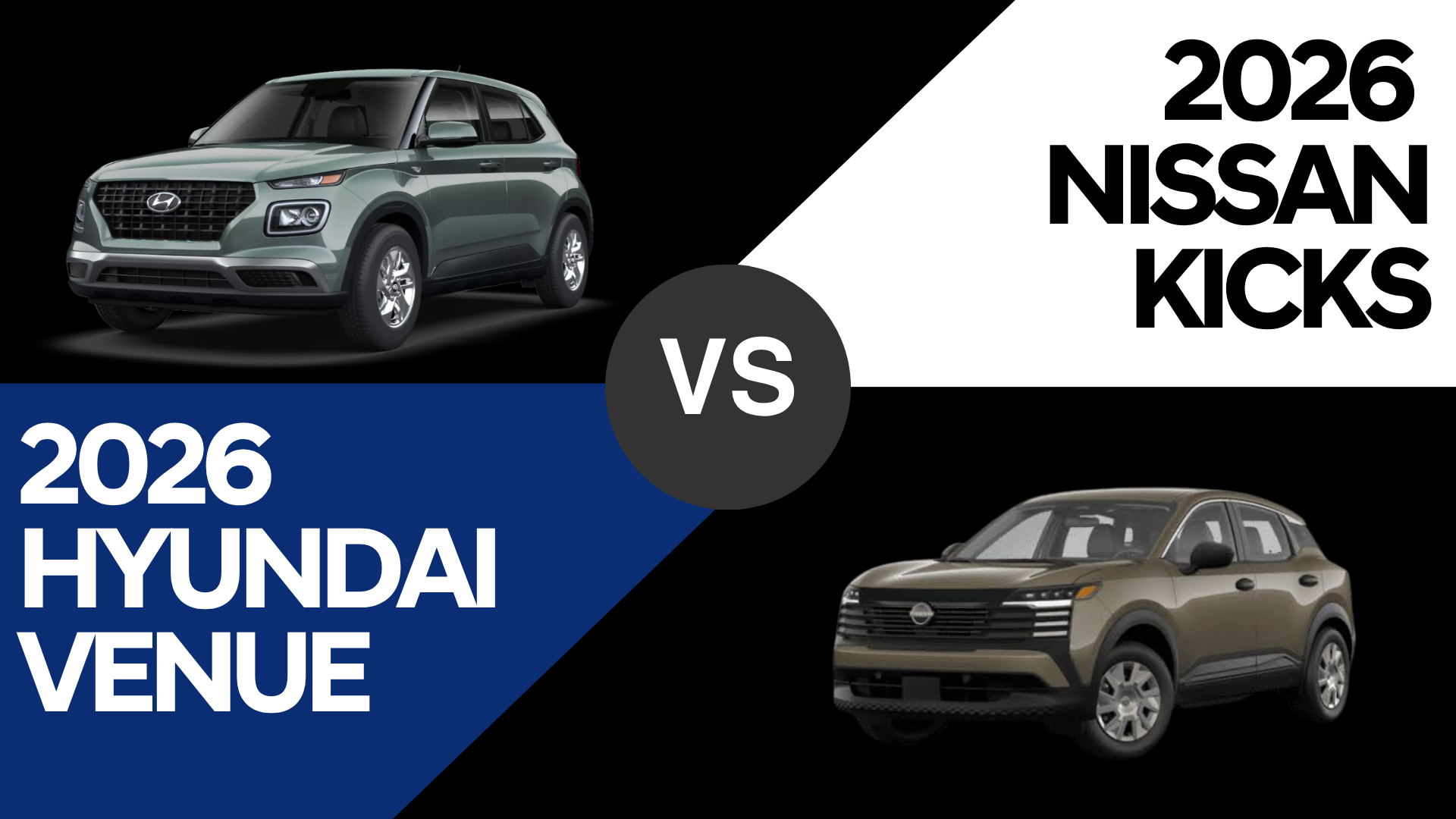
2026 Hyundai Venue vs. 2026 Nissan Kicks comparison blog

2026 Hyundai Venue vs. Nissan Kicks: Which Small SUV Wins in Conway, AR?

Shopping for a small SUV can feel like a big decision, even when the vehicle itself is small. If you are cross-shopping the 2026 Hyundai Venue against the redesigned 2026 Nissan Kicks, you already know both are priced for budget-friendly buyers who still want modern tech and safety features. But once you look past the sticker price, the two vehicles tell very different stories. Here at Chris Crain Hyundai in Conway, AR, we help drivers compare vehicles every day. Below, we break down price, performance, technology, safety, and warranty coverage so you can see exactly why so many local drivers choose the Venue. Starting Price: Venue Wins on Value Price is usually the first thing shoppers ask about, and it is where the Venue pulls ahead right away. The 2026 Hyundai Venue starts at $20,550 for the SE trim, with the well-equipped SEL trim priced at $22,825. That is a simple, two-trim lineup that keeps shopping easy. The 2026 Nissan Kicks starts higher, at $22,730 for the base S trim with front-wheel drive. Nissan also offers six different configurations across three trims (S, SV, and SR), with all-wheel drive adding about $1,650 to any trim. A fully loaded SR AWD Kicks tops out at $28,460. In plain terms, you can drive home in a brand-new Venue for over $2,000 less than the cheapest Kicks. That is real money that can go toward a down payment, an extended warranty, or simply staying in your budget. You can run your own numbers using our online payment calculator to see what a Venue payment might look like for your situation. Under the Hood: Kicks Has More Power, But At a Cost If horsepower numbers are what matter most to you, the Kicks technically wins this round. The redesigned 2026 Kicks now uses a 2.0-liter four-cylinder engine that makes 141 horsepower and 140 lb-ft of torque, a big jump from the smaller engine it used to have. The Venue uses a 1.6-liter four-cylinder engine rated at 121 horsepower and 113 lb-ft of torque. Both vehicles pair their engines with a continuously variable transmission (CVT), and the Kicks also offers all-wheel drive as an option, while the Venue is front-wheel drive only. That said, more power is not always the deciding factor for small SUV buyers. Around Conway and Faulkner County, most drivers use these vehicles for commuting, errands, and weekend trips, where the Venue's engine is plenty capable and helps keep prices and long-term ownership costs lower. Fuel Economy: A Near Tie When it comes to gas mileage, the two vehicles are close. The Venue earns an EPA-estimated 29 mpg city, 32 mpg highway, and 31 mpg combined. The Kicks comes in at 28 mpg city, 35 mpg highway, and 31 mpg combined as well. So while the Kicks edges out the Venue slightly on the highway, the two SUVs land in the same spot for combined fuel economy. Neither one will put a huge dent in your gas budget, which is exactly what shoppers in this class are looking for. Technology and Interior Features The Kicks offers a larger touchscreen at 12.3 inches, compared to the Venue's 8-inch display. However, the Venue still comes standard with the features drivers actually use most, including wireless-capable Apple CarPlay and Android Auto, a six-speaker sound system, and modern USB-C charging ports. Step up to the SEL trim, and you also get available heated front seats and a sunroof, features that add real comfort without a huge jump in price. The Kicks SV and SR trims add extras like wireless charging and adaptive cruise control, but those features come bundled with the higher trims and their higher price tags. If you want to see how the Venue compares to other small Hyundai SUVs in the lineup, our blog post on comparing Hyundai's SUVs is a helpful next read. Safety Features: Both Come Well-Equipped Safety is non-negotiable for most families, and both of these small SUVs come with a solid list of standard driver-assist features. The Venue includes a rearview camera, blind-spot monitoring, forward collision-avoidance assistance, a tire pressure warning system, and standard stability control. The Kicks matches many of these with standard blind-spot and lane-departure warnings, forward collision warning, and four-wheel anti-lock brakes. Both vehicles give shoppers in Conway peace of mind, whether they are driving across town or out on Highway 65. Warranty Coverage: Hyundai Pulls Ahead This is where the Venue truly separates itself from the Kicks. Every new Hyundai, including the Venue, comes with a 5-year/60,000-mile basic warranty and a 10-year/100,000-mile powertrain warranty. Nissan's coverage on the Kicks is shorter, with a 3-year/36,000-mile basic warranty and a 5-year/60,000-mile powertrain warranty. That means the Venue's powertrain warranty alone covers twice the miles and twice as many years as the Kicks'. For many buyers, that extra protection is worth more than a slightly bigger touchscreen or a few extra horsepower. Which One Is Right for You? If your top priorities are a lower starting price, one of the best warranties in the industry, and a simple, easy-to-shop lineup, the 2026 Hyundai Venue is the stronger choice for most Conway-area drivers. If having the option of all-wheel drive or a larger touchscreen matters more to you than price and warranty length, the Kicks is worth a test drive too. How does the Venue stack up against other small SUVs on the market? Check out our comparison of the 2026 Hyundai Kona vs. 2026 Kia Seltos or read more about Hyundai's full 2026 lineup to see everything new for this model year. Ready to see the 2026 Hyundai Venue in person? Browse our new Venue inventory, check out our full new vehicle inventory, or schedule a test drive today. Our team at Chris Crain Hyundai in Conway, AR, is ready to help you find the right fit for your budget and your driving needs.

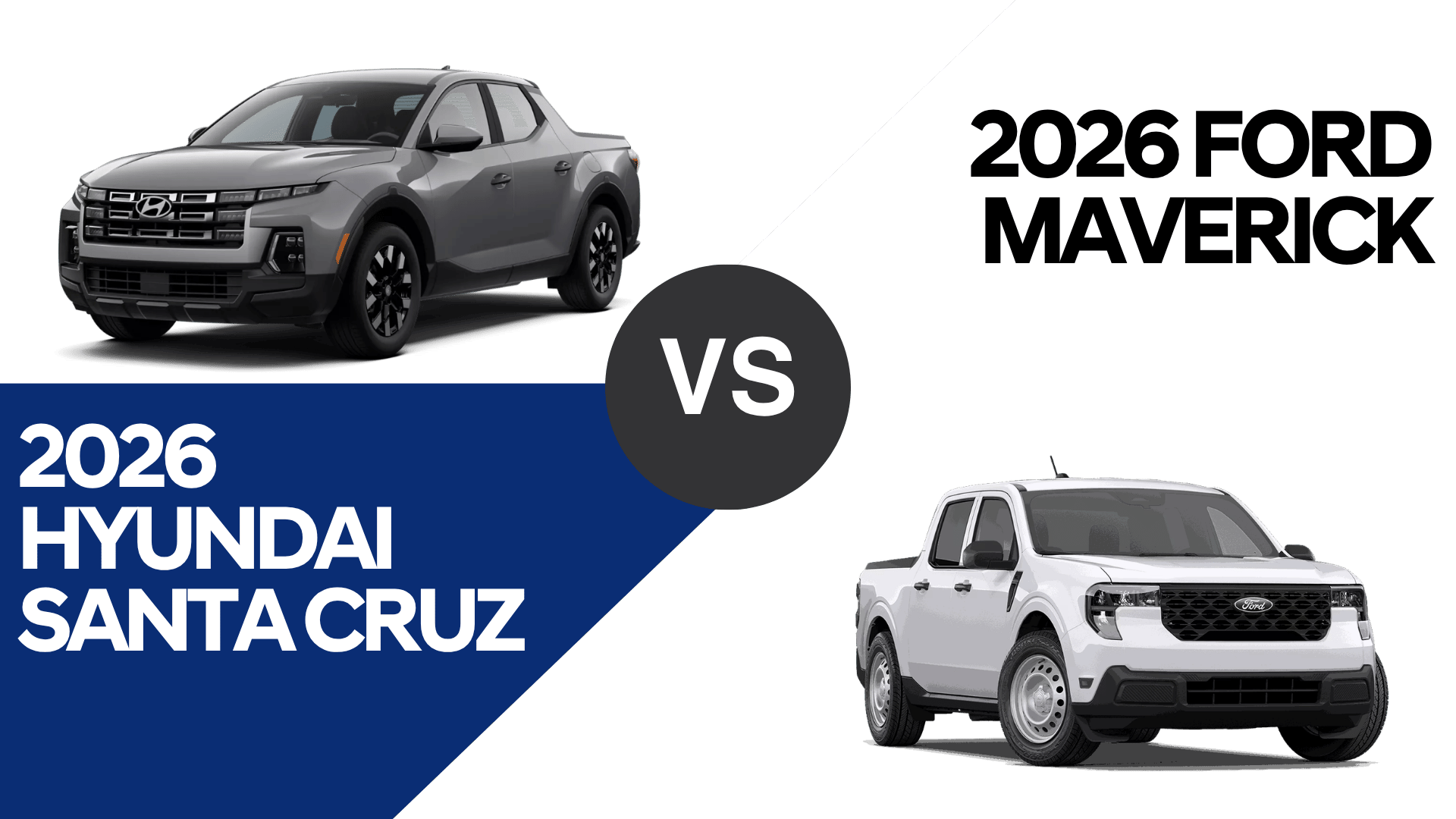
2026 Hyundai Santa Cruz vs. 2026 Ford Maverick

2026 Hyundai Santa Cruz vs. 2026 Ford Maverick: Which Truck Is Right for Conway, AR?

Two Compact Trucks, One Big Decision for Conway Drivers Conway, AR truck shoppers comparing compact pickups usually land on two names: the 2026 Hyundai Santa Cruz vs. the 2026 Ford Maverick. Both are five-passenger, four-door pickups built for daily commutes and weekend hauling, but they start from different places under the hood — the Maverick's standard engine is a 2.5L hybrid. In contrast, the Santa Cruz starts with a traditional 2.5L gas engine and offers a more powerful turbo gas option higher in the lineup. At Chris Crain Hyundai, we took the time to compare both as configured from the factory, covering design, ride, cab and bed space, technology, safety, performance, towing, and ownership value before landing on a recommendation for Conway drivers. For full trim details, see the 2026 Hyundai Santa Cruz research page. Vehicle Comparison 2026 Hyundai Santa Cruz Horsepower 191 hp standard (2.5L GDI-MPI); 281 hp available (2.5L Turbocharged, XRT/Limited) AWD Availability Available Fuel Economy / Range FWD 25 combined (22 city/30 hwy); AWD 24 combined (21 city/29 hwy); Turbo 20 combined (18 city/25 hwy) mpg (city/hwy) Seating Capacity 5 Top Features Standard bed tie-downs (up to 6) with sealed underfloor storage Available 115V power inverter and lockable tonneau cover Available HTRAC AWD with turbo engine (tows up to 5,000 lbs) Find Your New Santa Cruz! 2026 Ford Maverick Horsepower 184 hp combined standard (2.5L Hybrid); 250 hp @ 5,500 rpm available (2.0L EcoBoost) AWD Availability Available Fuel Economy / Range EPA-estimated 42 MPG city (Hybrid; combined/highway figures not published on source page) MPGe Seating Capacity 5 Top Features FLEXBED Storage System In-bed 12V power outlet (available Pro Power Onboard) Available AWD with EcoBoost engine (tows up to 4,000 lbs with 4K Tow Package) Check Out Our Used Cars Design and Styling: Sport Adventure Vehicle vs. Purpose-Built Utility The Santa Cruz leans into its "Sport Adventure Vehicle" identity, and the XRT trim pushes that further with exposed front tow hooks, 18-inch all-terrain wheels, a new Terrain Mode Select with Snow, Mud, and Sand modes, exclusive cladding, and XRT tailgate badging. The Maverick spreads its personality across trims: the performance-minded Lobo pairs 250 horsepower with Lobo Mode and torque vectoring for stability. In contrast, the Tremor trim adds Advanced 4-Wheel Drive for off-road use. Santa Cruz XRT: tow hooks, all-terrain tires, Terrain Mode Select (Snow/Mud/Sand) Maverick Lobo: 250-hp EcoBoost, Lobo Mode, torque vectoring; Tremor adds Advanced 4WD Ride and Performance: Two Ways to Power a Compact Truck Santa Cruz's standard 2.5L engine makes 191 hp, while the available 2.5L turbocharged engine (XRT and Limited trims) bumps that to 281 hp and adds standard HTRAC AWD. The Maverick's standard 2.5L hybrid produces 184 hp combined through a CVT, with an available 2.0L EcoBoost making 250 hp through an 8-speed automatic — AWD is available on both engines and standard on the Lariat trim. Santa Cruz: 191 hp standard, 281 hp available (turbo, HTRAC AWD standard on that engine) Maverick: 184 hp combined standard (hybrid), 250 hp available (EcoBoost), AWD available Cab and Bed Space: Room to Ride, Room to Haul Since this comparison is about trucks people actually use, bed practicality matters as much as cab comfort. The Santa Cruz offers 101.8 cubic feet of passenger volume plus a bed with up to six standard tie-down points, molded-in cross-plank support slots, and a sealed underfloor storage bin that drains. Available extras include a 115V power inverter and a lockable tonneau cover. The Maverick's bed measures 4'5" (54.4 inches) long with 33.3 cubic feet of cargo volume, built around Ford's FLEXBED Storage System and an in-bed 12V power outlet. Santa Cruz: 101.8 cu ft passenger volume, 6 bed tie-downs, sealed underfloor storage, available 115V outlet Maverick: 33.3 cu ft bed volume, 4'5" bed length, FLEXBED storage system, in-bed 12V power. Technology: Screens and Connectivity The Santa Cruz comes standard with a 12.3-inch touchscreen (available with navigation), an available 12.3-inch digital instrument cluster that combines into a panoramic curved display, plus Bluelink+ connectivity and wireless Apple CarPlay and Android Auto. The Maverick counters with a larger standard 13.2-inch center display running SYNC 4. Curious how Hyundai's AWD system stacks up? Check our HTRAC AWD explained guide. Santa Cruz: 12.3-inch touchscreen standard, available digital cluster, and panoramic display Maverick: 13.2-inch touchscreen with SYNC 4 standard Safety: Confirmed Ratings vs. Available Driver Assist The 2026 Santa Cruz is a 2025 IIHS Top Safety Pick and carries a 5-Star NHTSA Overall Safety Rating, backed by the Hyundai SmartSense suite. The Maverick offers available Ford Co-Pilot360 Driver-Assist Technologies. For more on Hyundai's safety suite, see our Hyundai SmartSense safety technology guide. Santa Cruz: 2025 IIHS Top Safety Pick, 5-Star NHTSA rating, Hyundai SmartSense Maverick: available Ford Co-Pilot360 Driver-Assist Technologies Performance, AWD, and Fuel Economy For Conway drivers, cross-shopping power and efficiency, the two trucks take different approaches. The Santa Cruz's standard 191-hp engine returns up to 25 combined MPG in FWD trims (22 city/30 highway) or 24 combined with available HTRAC AWD (21 city/29 highway); the available 281-hp turbo engine, paired with standard HTRAC AWD, returns 20 combined MPG (18 city/25 highway) and can tow up to 5,000 lbs. The Maverick's standard 184-hp hybrid is EPA-estimated at 42 MPG city, with AWD available (standard on Lariat); the available 250-hp EcoBoost engine tows up to 4,000 lbs with the available 4K Tow Package and offers up to 1,500 lbs of payload. Santa Cruz: 191–281 hp, HTRAC AWD available, tows up to 5,000 lbs with the turbo engine Maverick: 184–250 hp, AWD available, tows up to 4,000 lbs with the 4K Tow Pack Package. Our Take: Why We'd Point Conway Drivers to the Santa Cruz Both trucks are genuinely capable compact pickups, and the Maverick's lower price and standard hybrid efficiency make it an easy truck to like for city driving around Conway. But for buyers who use the bed for real work or weekend gear, we lean Santa Cruz: it offers a higher available horsepower ceiling, a 5,000-lb tow rating that beats the Maverick's 4,000-lb max, a confirmed 2025 IIHS Top Safety Pick, standard bed tie-downs with sealed underfloor storage, and a powertrain warranty that doubles Ford's coverage. Maverick shoppers prioritizing a lower price and class-leading city fuel economy still have a strong option — but the Santa Cruz's combination of capability and coverage makes it our pick for most Conway drivers. Stop by Chris Crain Hyundai today to see why we are your go-to Hyundai Dealer! FAQs: 2026 Hyundai Santa Cruz vs. 2026 Ford Maverick Which truck has more towing capacity, the Santa Cruz or the Maverick? The Santa Cruz's available turbo engine tows up to 5,000 lbs, 1,000 lbs more than the Maverick's 4,000-lb max with the available 4K Tow Package. Is all-wheel drive available on both the Santa Cruz and Maverick? Yes. Hyundai's HTRAC AWD is available across the Santa Cruz lineup (standard with the turbo engine), and Ford's AWD is available on the Maverick and standard on the Lariat trim. Which truck has the longer warranty, Santa Cruz or Maverick? The Santa Cruz, backed by Hyundai's 10-year/100,000-mile powertrain warranty versus the Maverick's 5-year/60,000-mile coverage.

2026 Hyundai Tucson and 2026 Subaru Forester compact SUVs side by side for Conway, Arkansas, shoppers

2026 Hyundai Tucson vs. 2026 Subaru Forester: Which SUV Is Better for Conway, AR Drivers?

Comparing Two Compact SUVs for Central Arkansas Roads Conway, AR drivers cross-shopping compact SUVs keep landing on the same two names: the 2026 Hyundai Tucson vs. the 2026 Subaru Forester. Both are five-passenger compact SUVs built for interstate commutes, river-valley backroads, and unpredictable Arkansas weather. This comparison focuses on the standard gas lineups — the Tucson also comes in Hybrid and Plug-in Hybrid, and the Forester offers a Hybrid, but a gas-to-gas look keeps things apples-to-apples. At Chris Crain Hyundai, we evaluate design, performance, interior space, technology, safety, fuel economy, and ownership value before making a recommendation. For full trim details, see the 2026 Hyundai Tucson research page. Vehicle Comparison 2026 Hyundai Tucson Horsepower 187 hp (2.5L GDI/MPI 4-cylinder) AWD Availability Available Fuel Economy / Range FWD 25 city/33 hwy/28 combined; AWD 24 city/30 hwy/26 combined mpg (city/hwy) Seating Capacity 5 Top Features HTRAC AWD Panoramic curved display Hands-free smart power liftgate Find Your New Tucson! 2026 Subaru Forester Horsepower 180 hp @ 5,800 rpm (2.5L 4-cylinder) AWD Availability Standard Fuel Economy / Range Base/Premium/Limited 26 city/33 hwy; Sport/Touring 25 city/32 hwy mpg (city/hwy) Seating Capacity 5 Top Features Standard Symmetrical AWD 11.6" Multimedia touchscreen Foot-activated hands-free Power Rear Gate Check Out Our Used Cars Design and Styling: Bold Curves vs. Rugged Utility The Tucson wears "uptown style" with a bold front face, available 19-inch alloy wheels, a hands-free smart power liftgate on upper trims, and an XRT trim adding unique lower fascias and exterior cladding for a rugged look. The Forester keeps a more traditional shape across Base through Touring trims. However, the Sport's available Onyx Edition Package brings gloss-black and metallic accents, standard 19-inch wheels, and Black/Gray StarTex upholstery. Drivers wanting real off-road styling should note the Forester Wilderness, which adds standard all-terrain tires and increased ground clearance. Tucson XRT adds off-road-inspired cladding and fascias without changing ride height. Forester Wilderness offers standard all-terrain tires and more ground clearance.e Both offer available 19-inch alloy wheels on upper trims Ride and Performance: Everyday Comfort Meets Confident Handling On Conway's mix of highway miles and backroads, both SUVs are tuned for comfort first. The Tucson's 187-hp 2.5L four-cylinder pairs with available HTRAC AWD, which actively distributes power between the front and rear axles for extra grip. The Forester's 180-hp 2.5L engine comes with Symmetrical All-Wheel Drive standard on every trim, plus available X-MODE and dual-function X-MODE for added traction in slick or uneven conditions — a system built into the Forester's core identity. Tucson: 187 hp, HTRAC AWD available Forester: 180 hp, Symmetrical AWD standard on every trim, available X-MODE traction control Interior and Space: Room to Live With Both SUVs seat five and are built for families and gear. The Tucson offers up to 108.2 cubic feet of passenger volume and up to 74.8 cubic feet of cargo space, with a dual-level cargo floor and remote-release 60/40 split fold-down rear seats. The Forester counters with up to 110.8 cubic feet of passenger volume on the Base trim (106.6 cubic feet on other trims) and up to 74.4 cubic feet of maximum cargo space. Tucson: 108.2 cu ft passenger volume, 74.8 cu ft max cargo, dual-level cargo floor Forester: up to 110.8 cu ft passenger volume (Base trim), 74.4 cu ft max cargo Technology: Screens, Connectivity, and Convenience The Tucson comes standard with a 12.3-inch touchscreen. It offers a 12.3-inch digital instrument cluster that pairs with a panoramic curved display, plus Bluelink+ connectivity, wireless Android Auto and Apple CarPlay, Hyundai Digital Key 2, and wireless device charging. The Forester's tech centers on its available 11.6-inch Multimedia Plus System and 11.6-inch Multimedia System with Navigation, with an optional Harman Kardon audio package on upper trims. Want the full rundown on Hyundai's setup? See our HTRAC AWD explained guide, which also covers Tucson's driver tech. Tucson: 12.3-inch touchscreen standard, available digital cluster, and panoramic display Forester: available 11.6-inch Multimedia Plus/Navigation systems, optional Harman Kardon audio Safety: Two Different Paths to Peace of Mind Both SUVs are strong safety performers. The 2026 Tucson earned a 2026 IIHS Top Safety Pick+ award and a 5-Star NHTSA overall safety rating, plus available Remote Smart Parking Assist, Blind-Spot View Monitor, and Surround View Monitor. The Forester relies on standard EyeSight Driver Assist Technology, with available Automatic Emergency Steering and a 360-degree Surround-View Monitor, and its own 5-Star NHTSA Overall Vehicle Score. For a closer look at Hyundai's suite, read our Hyundai SmartSense safety technology guide. Tucson: 2026 IIHS Top Safety Pick+, 5-Star NHTSA rating, available Remote Smart Parking Assist Forester: standard EyeSight Driver Assist, available Automatic Emergency Steering, 5-Star NHTSA rating Performance, AWD, and Fuel Economy For Conway drivers weighing fuel costs, the numbers are close. The gas Tucson's 187-hp engine returns up to 28 combined MPG in FWD trims (25 city/33 highway) or 26 combined in AWD trims (24 city/30 highway), with HTRAC AWD available across the gas lineup. The gas Forester's 180-hp engine, with Symmetrical AWD standard on every trim, returns up to 33 highway/26 city MPG on Base, Premium, and Limited, or 32 highway/25 city on Sport and Touring. Both brands also sell hybrids outside this comparison's scope — the Tucson Hybrid reaches up to 38 combined MPG, and the Forester Hybrid offers up to a 581-mile range. Tucson (gas): 187 hp, up to 28 combined MPG FWD, HTRAC AWD available Forester (gas): 180 hp, up to 33 hwy/26 city MPG, Symmetrical AWD standard Our Take: Why We'd Point Conway Drivers to the Tucson Both are excellent five-passenger compact SUVs, and the Forester's standard AWD on every trim is a genuine advantage for buyers who don't want to upgrade to a higher trim for it. For most Conway drivers, though, we lean toward Tucson. It pairs a lower starting price with a longer powertrain warranty, a standard 12.3-inch touchscreen that most Forester trims don't match, and available Remote Smart Parking Assist. Drivers who prioritize standard AWD or Subaru's resale reputation may still prefer the Forester — a reasonable call, too. Ready for a new ride? Stop by Chris Crain Hyundai in Conway, AR! FAQs: 2026 Hyundai Tucson vs. 2026 Subaru Forester Which, the Tucson or the Forester, gets better gas mileage? The gas Forester edges out the gas Tucson on paper, reaching up to 33 highway/26 city MPG on its top trims versus the Tucson FWD's 25 city/33 highway. Both brands also sell hybrid versions with notably higher combined MPG and range if efficiency is the priority. Is all-wheel drive standard on the Tucson and Forester? AWD is standard on every trim of the Forester. In Tucson, Hyundai's HTRAC AWD is available across the gas lineup, but isn't standard — FWD is the base configuration. Which SUV has the better warranty? Tucson has the edge here. Hyundai's America's Best Warranty includes a 10-year/100,000-mile powertrain limited warranty, which is 5 years and 40,000 miles longer than Subaru's coverage.